Gnaw, Crunch & Chew
2026
Book Design
Storytelling
Illustration
Storytelling
Illustration
Blending playful illustration with educational storytelling to create an engaging reading experience.
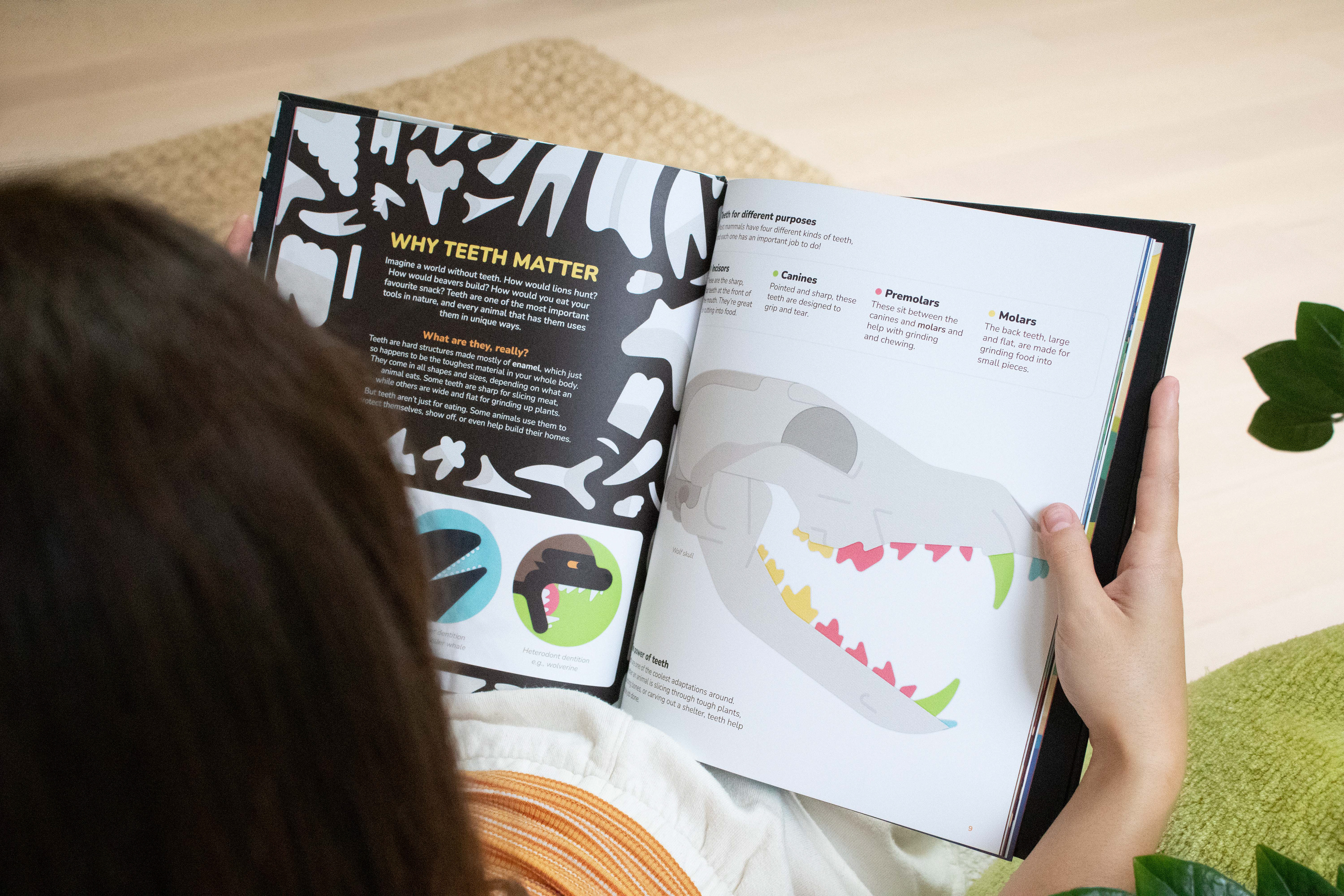
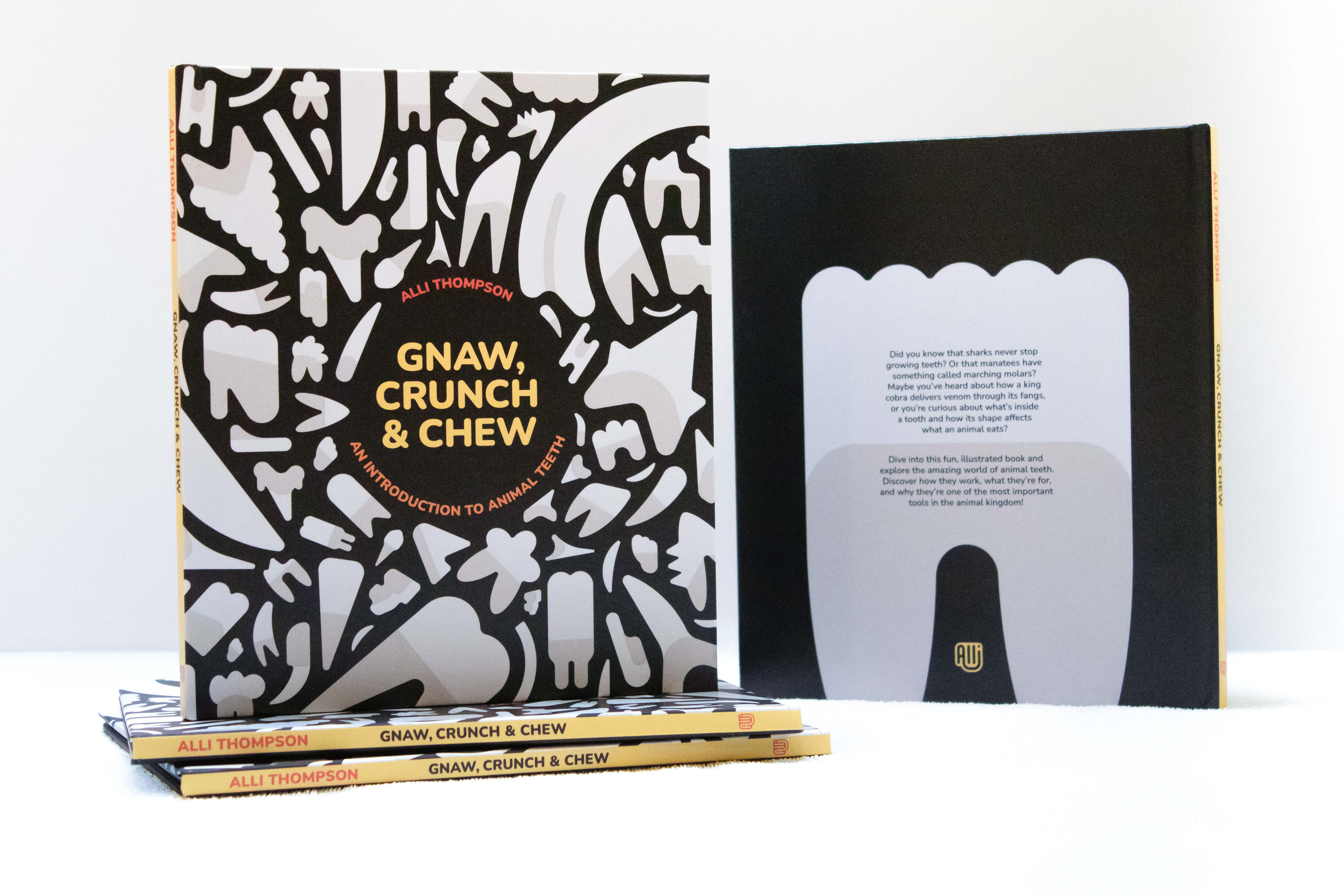
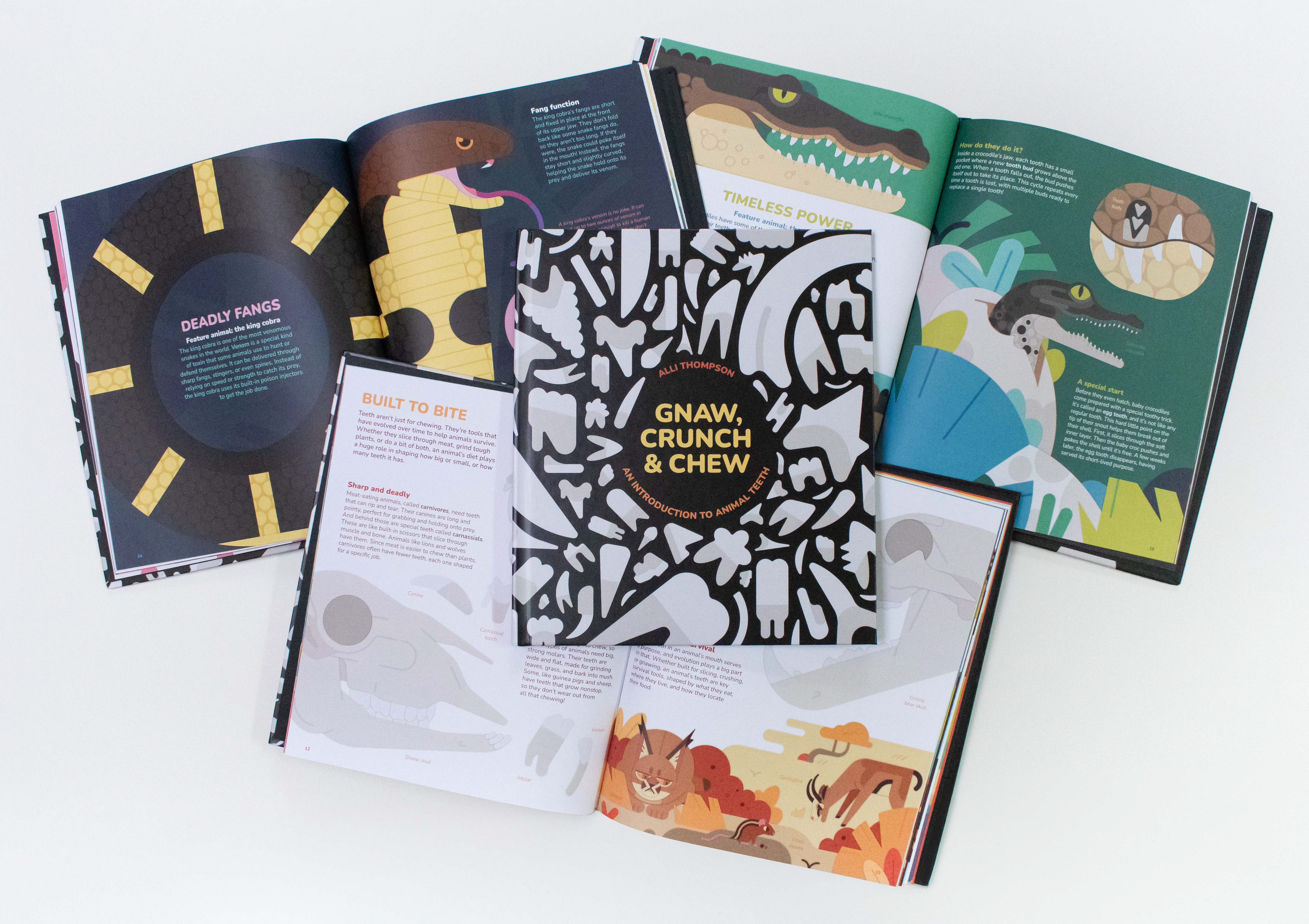
Gnaw, Crunch & Chew is a non-fiction children’s book that explores the fascinating world of animal teeth. Designed for readers aged 7 to 10, it combines playful language with clear explanations to make science feel fun, approachable, and memorable. The book guides readers through how teeth work, why they matter, and how different animals use them to survive. This project began as a personal goal after developing an interest in creating a children’s book back in college.
Gnaw, Crunch & Chew is a non-fiction children’s book that explores the fascinating world of animal teeth. Designed for readers aged 7 to 10, it combines playful language with clear explanations to make science feel fun, approachable, and memorable. The book guides readers through how teeth work, why they matter, and how different animals use them to survive. This project began as a personal goal after developing an interest in creating a children’s book back in college.
Step 1 - The Idea
I've always loved animals and collecting books about them. After studying graphic design, I became interested in creating a project that combined illustration, storytelling, and layout, which eventually led me to the idea of making a children's book.
I've always loved animals and collecting books about them. After studying graphic design, I became interested in creating a project that combined illustration, storytelling, and layout, which eventually led me to the idea of making a children's book.
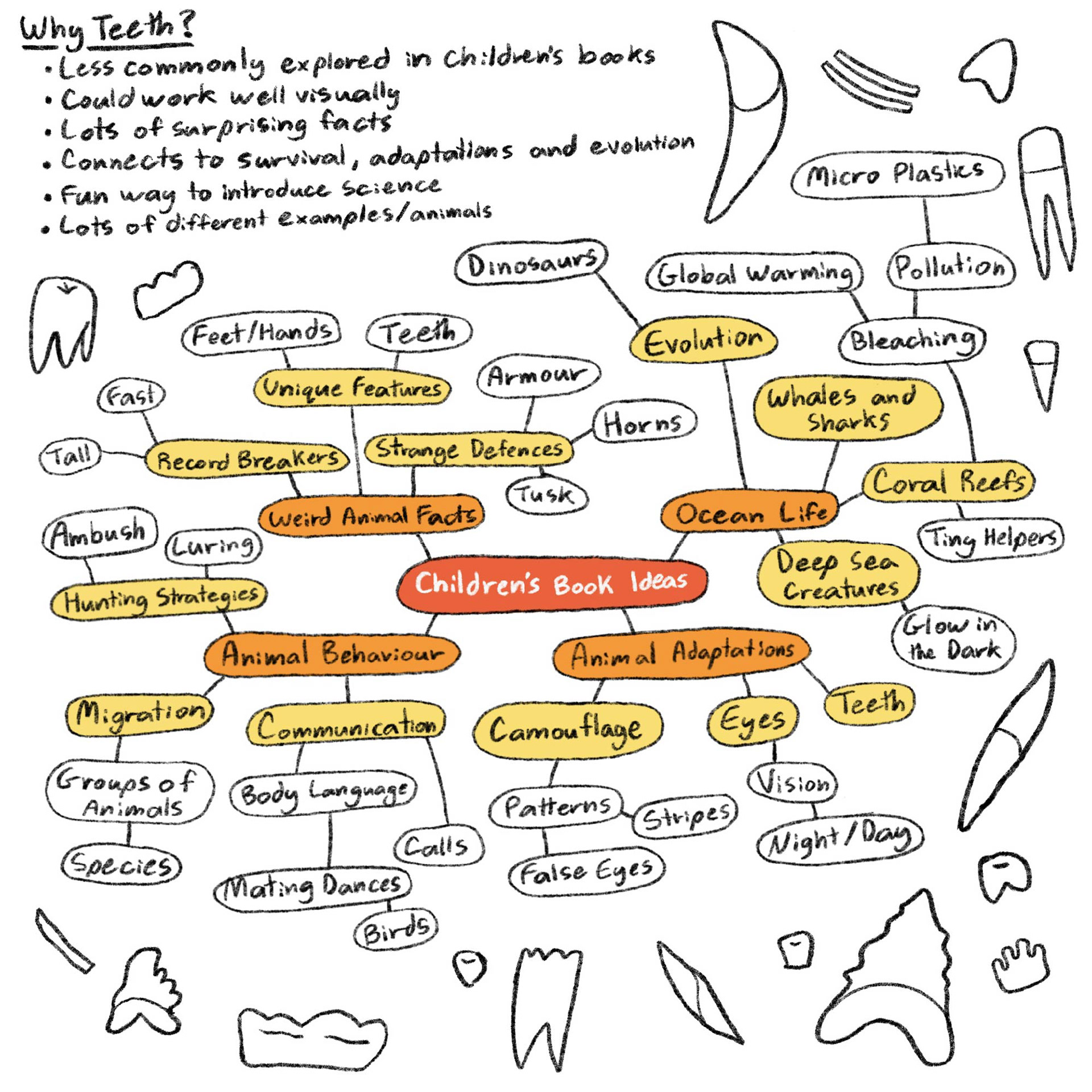
When choosing a topic, I explored several possibilities, including animal eyes, camouflage, and other fascinating adaptations found in nature. While these ideas were interesting, I found myself drawn to animal teeth. The more I researched, the more I realized how much variety, function, and surprising information could be found in a single subject. Teeth play an important role in how animals eat, hunt, defend themselves, and survive, yet they are not often the main focus of children's books. They also provided opportunities for engaging illustrations and comparisons between species, making science feel fun and approachable.
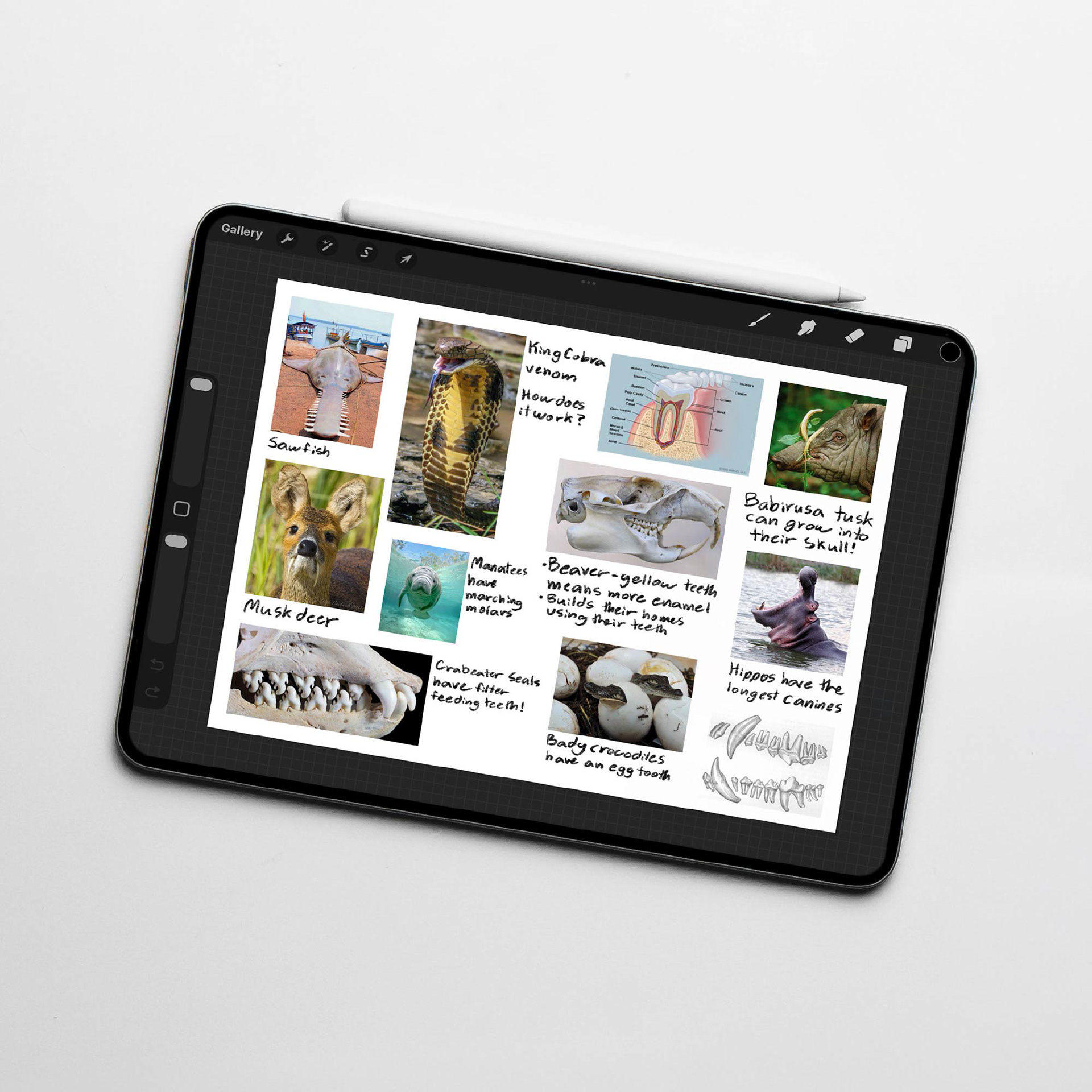
I created multiple artboards in Procreate to keep track of all the animals and teeth I wanted to feature throughout the book. During this process, I uncovered plenty of truths and busted a few myths along the way. For example, despite what cartoons and media led me to believe, birds do not actually clean crocodile teeth.
Step 2 - Research
Before writing or designing any pages, I spent a significant amount of time researching animal teeth, diets, adaptations, and behaviours. Since the book covers a wide range of species, it was important to ensure the information was accurate, engaging, and appropriate for the target audience. Information was gathered from books, articles, educational websites, documentaries, and videos, with facts carefully verified throughout the process.
Before writing or designing any pages, I spent a significant amount of time researching animal teeth, diets, adaptations, and behaviours. Since the book covers a wide range of species, it was important to ensure the information was accurate, engaging, and appropriate for the target audience. Information was gathered from books, articles, educational websites, documentaries, and videos, with facts carefully verified throughout the process.
I also researched children's books and writing for specific age groups. By studying articles, videos, and published books, I learned more about reading levels, vocabulary, pacing, and how to present information in a way that is educational without feeling overwhelming. Once the research was complete, the content was organized into short, digestible chapters with a playful narrative voice designed to keep young readers engaged and curious.
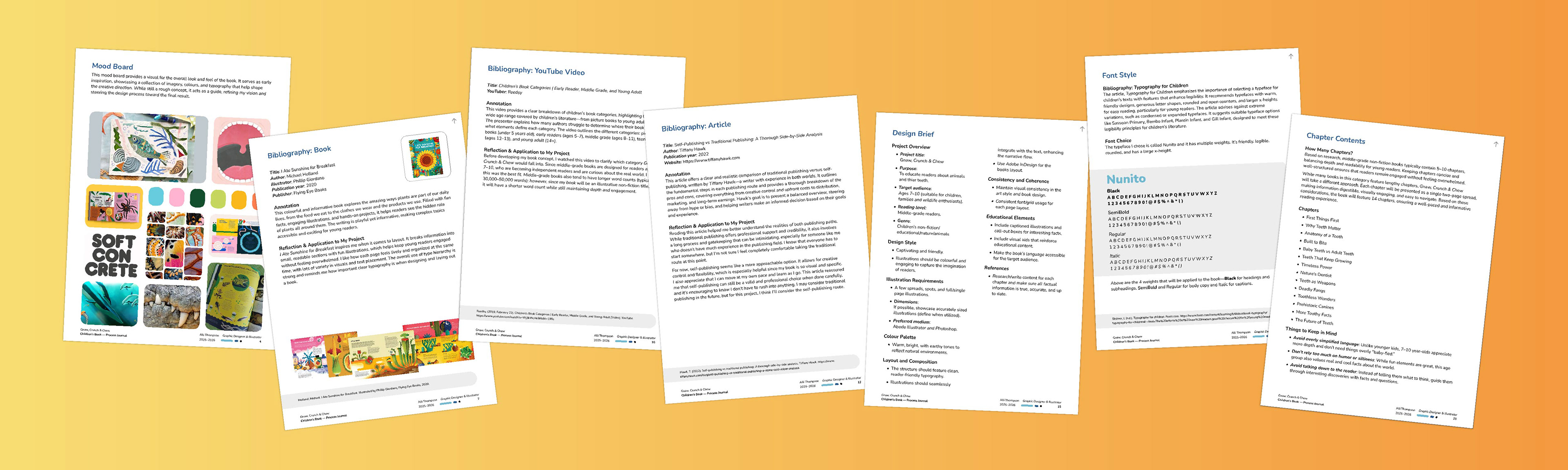
These are a few pages from my process journal.
Step 3 - The Planning Stage
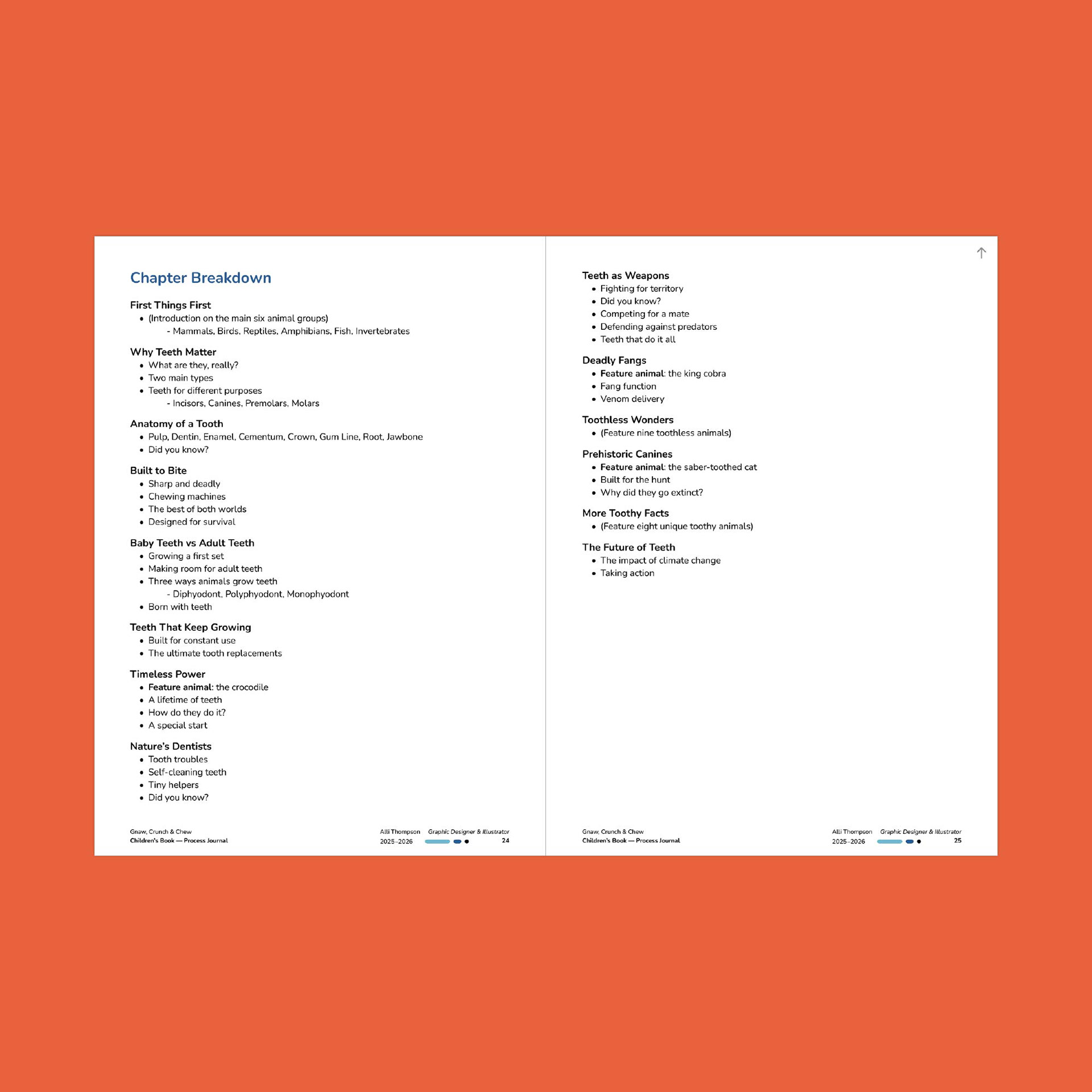
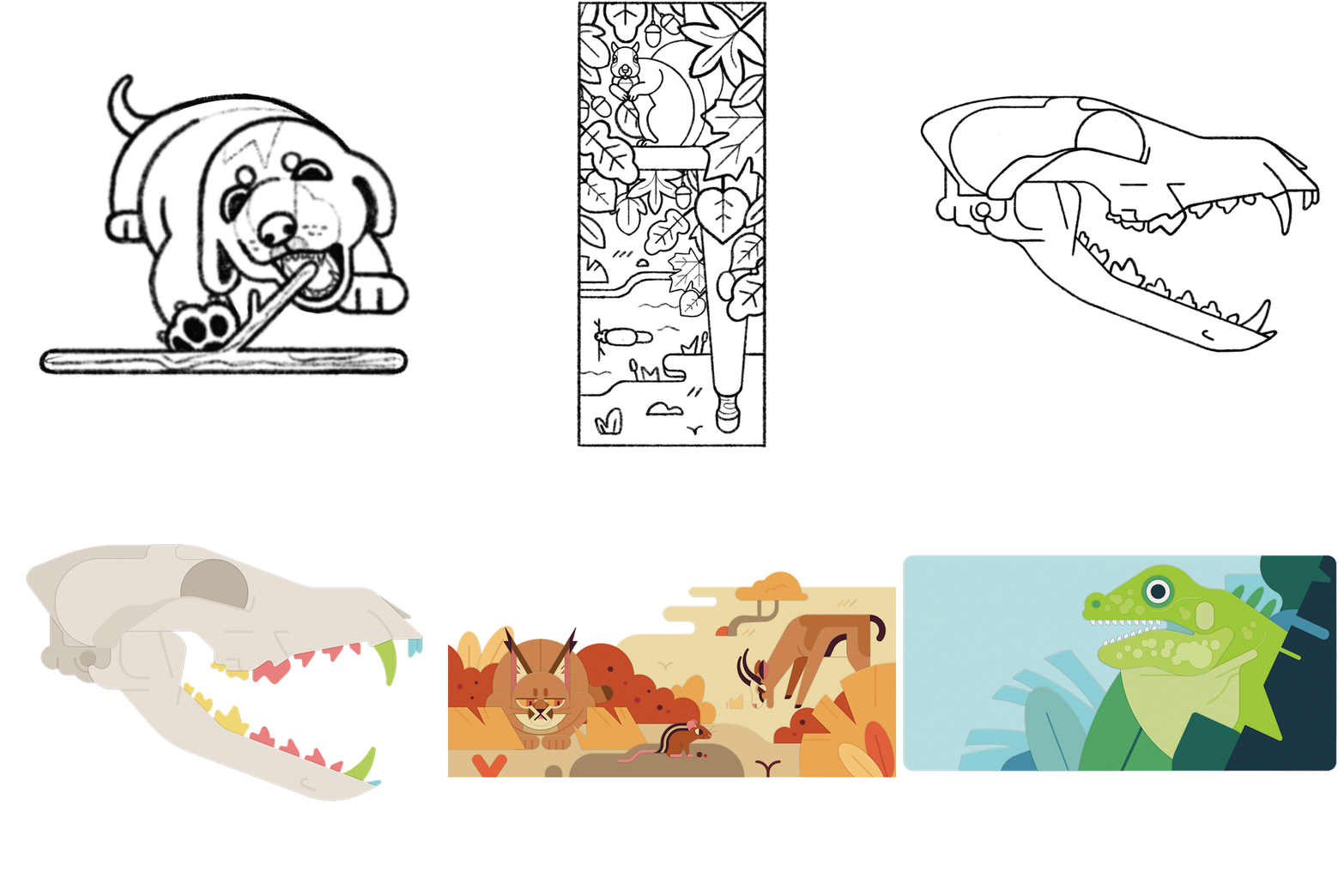
Once the research was complete, I began planning the structure of each chapter, ensuring the content flowed naturally from one topic to the next. Early thumbnail sketches helped explore pacing, composition, and how text and illustrations could work together to create an engaging reading experience.
Once the research was complete, I began planning the structure of each chapter, ensuring the content flowed naturally from one topic to the next. Early thumbnail sketches helped explore pacing, composition, and how text and illustrations could work together to create an engaging reading experience.
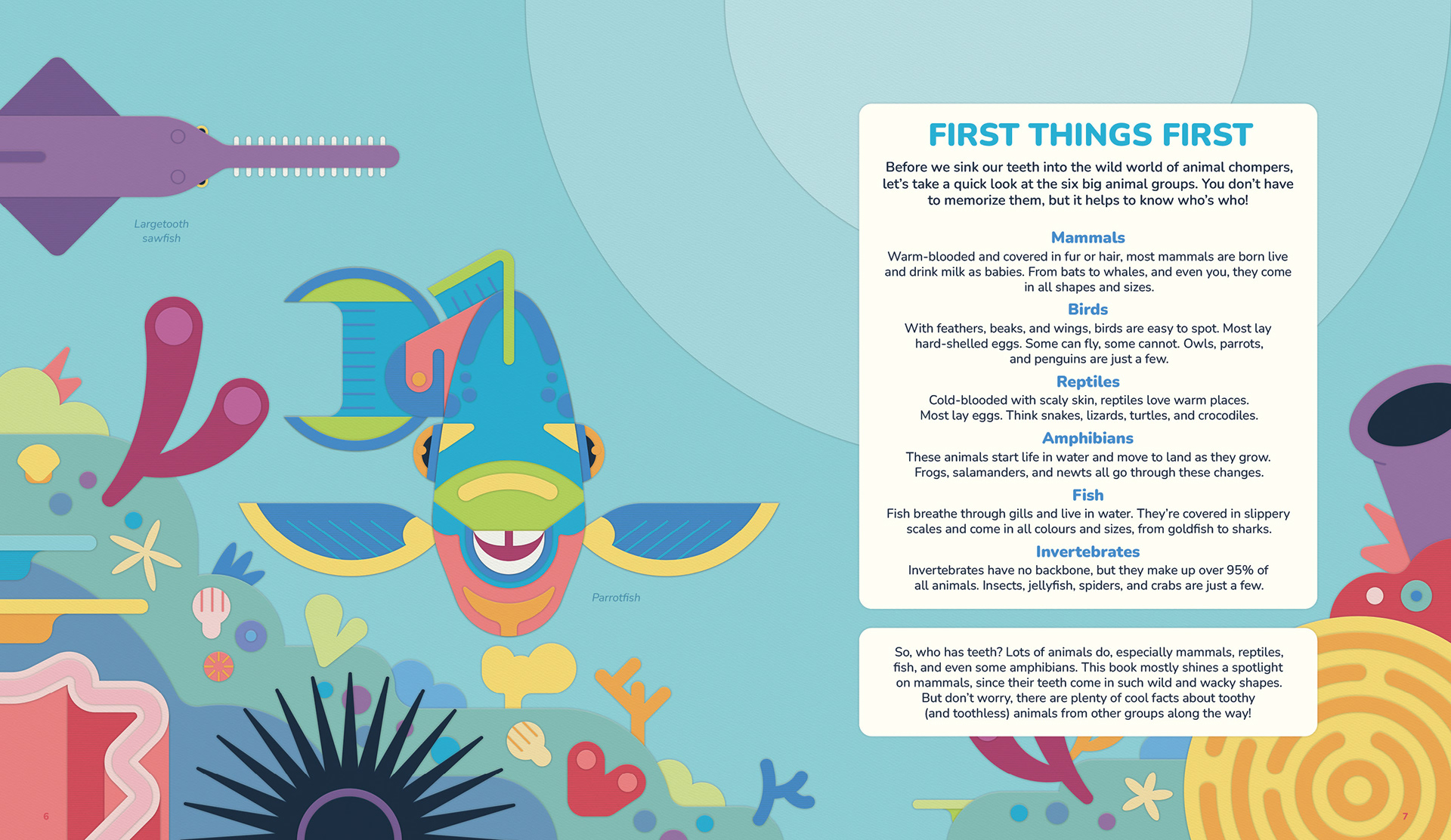
With the structure in place, it was time to settle on an illustration style. Looking at other educational children’s books for inspiration, I chose a simplified and approachable style that could communicate information clearly while keeping topics like teeth feeling fun, friendly, and inviting rather than intimidating. Since the book targets readers transitioning toward independent reading, I designed the spreads to be illustration-focused, using shorter sections of text supported by visuals.
Step 4 - From Sketch to Final
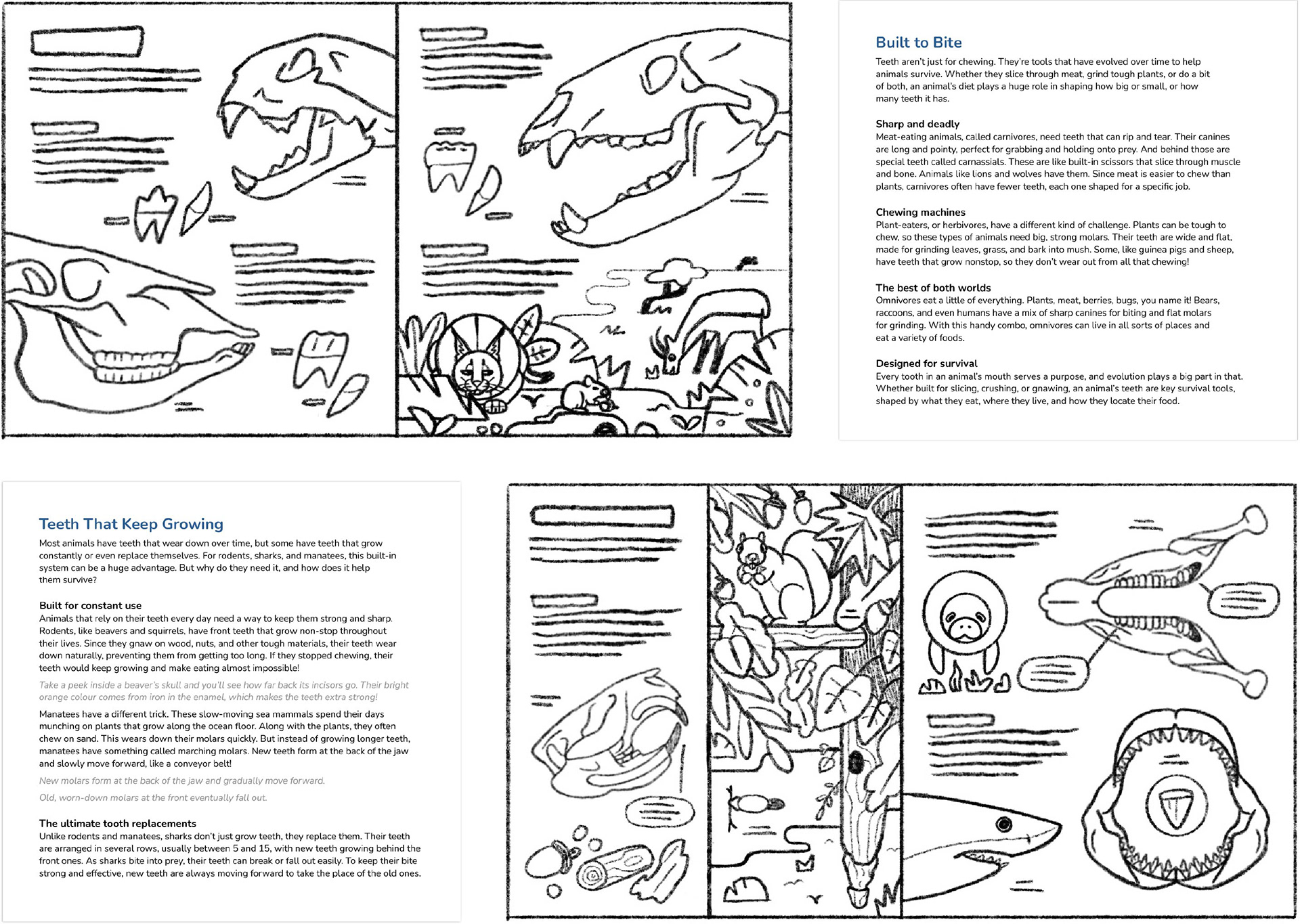
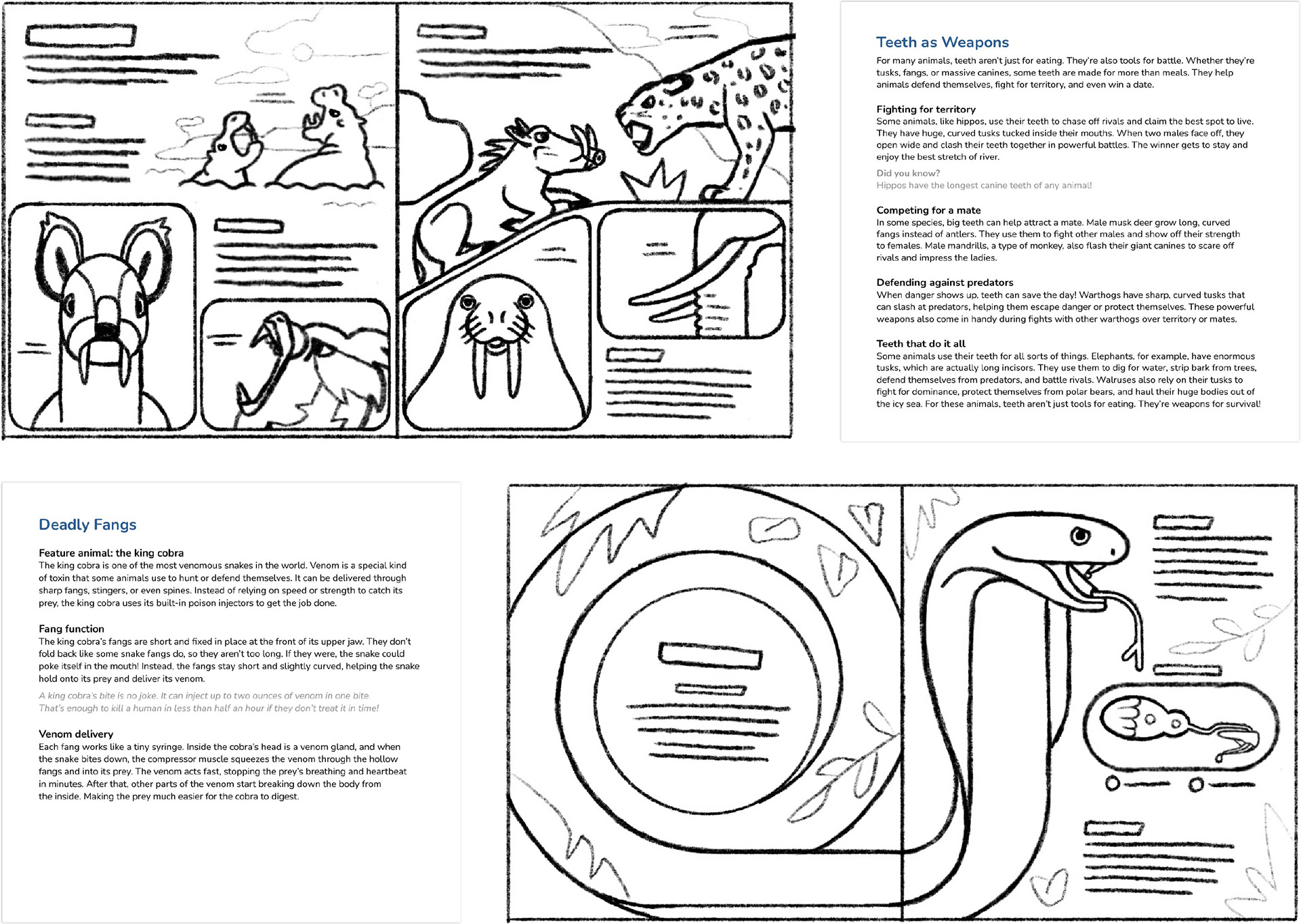
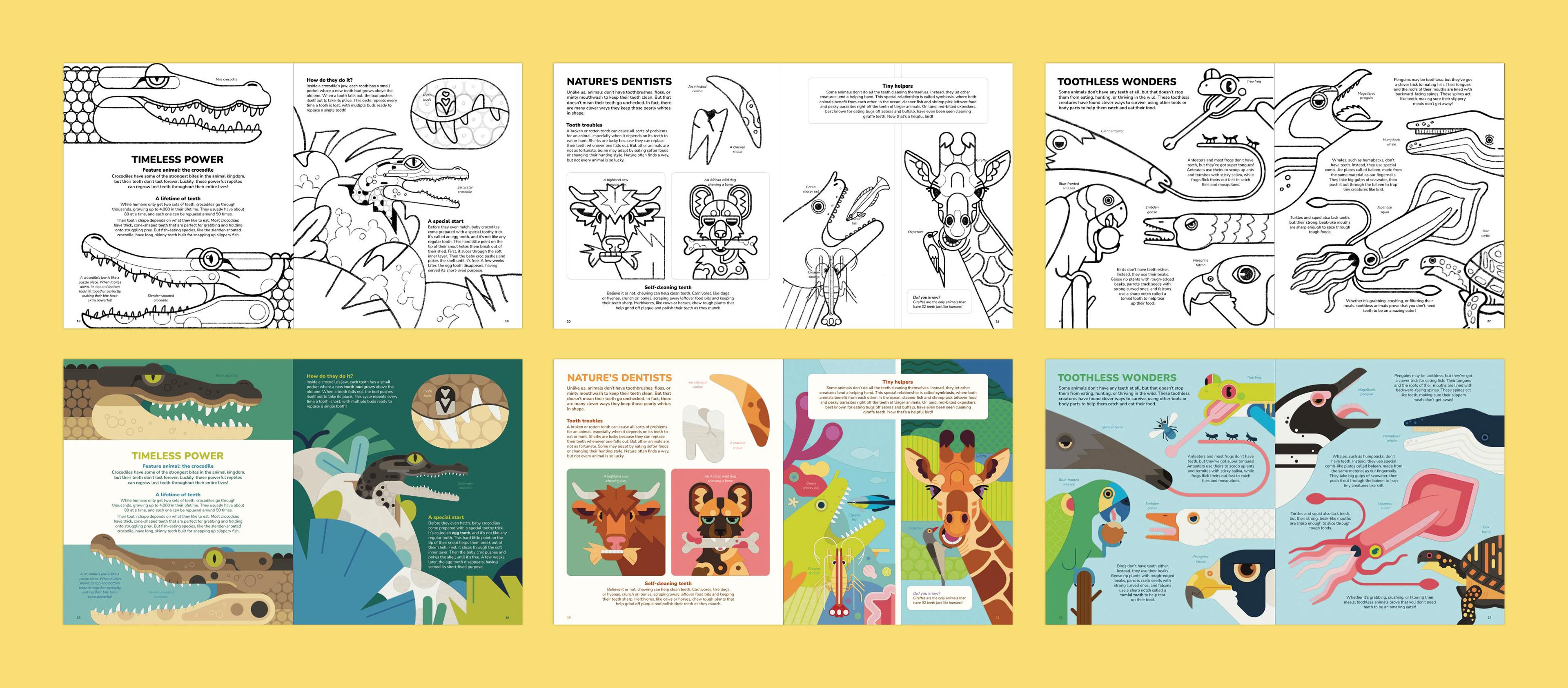
Each spread began with refined sketches developed from the initial thumbnails, where I started to turn ideas into more structured layouts. At this stage, I placed the chapter content into the spreads and explored how text and illustration would work together within the composition.
Each spread began with refined sketches developed from the initial thumbnails, where I started to turn ideas into more structured layouts. At this stage, I placed the chapter content into the spreads and explored how text and illustration would work together within the composition.
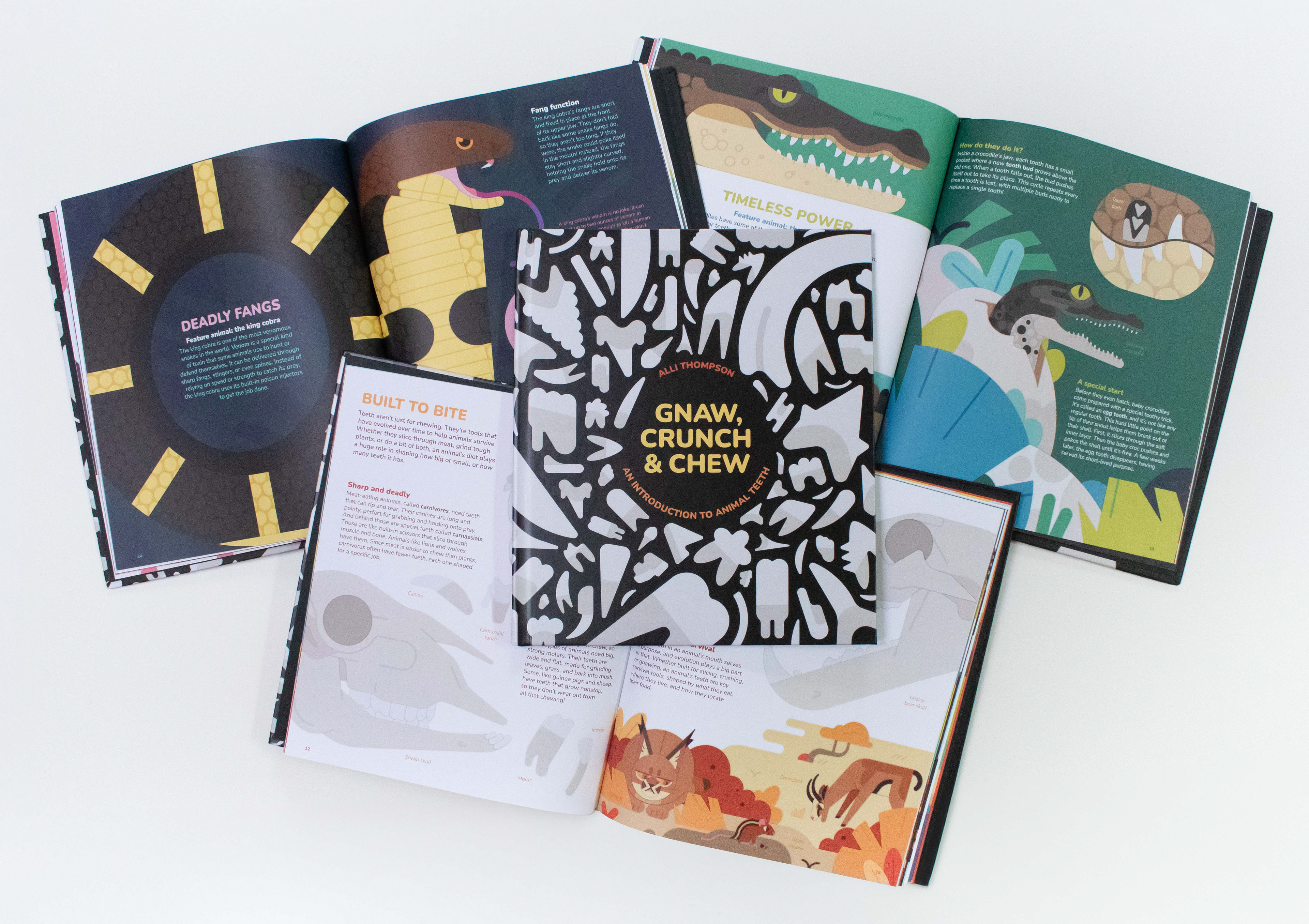
From there, I refined each layout further, adjusting hierarchy, spacing, and visual flow to ensure clarity and balance. Once the structure was complete, I moved into the final illustrations, bringing each spread to life with detailed artwork and visual storytelling.
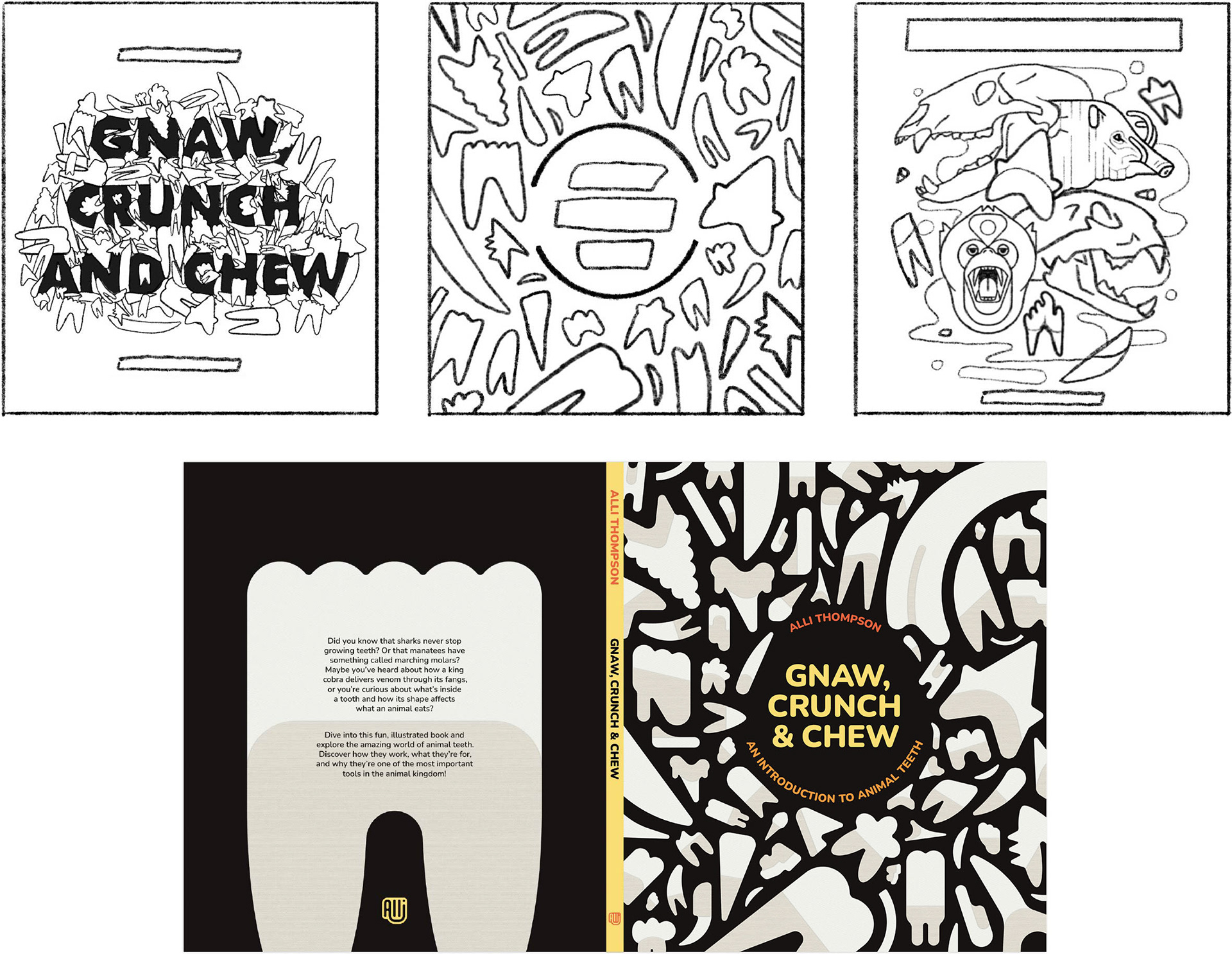
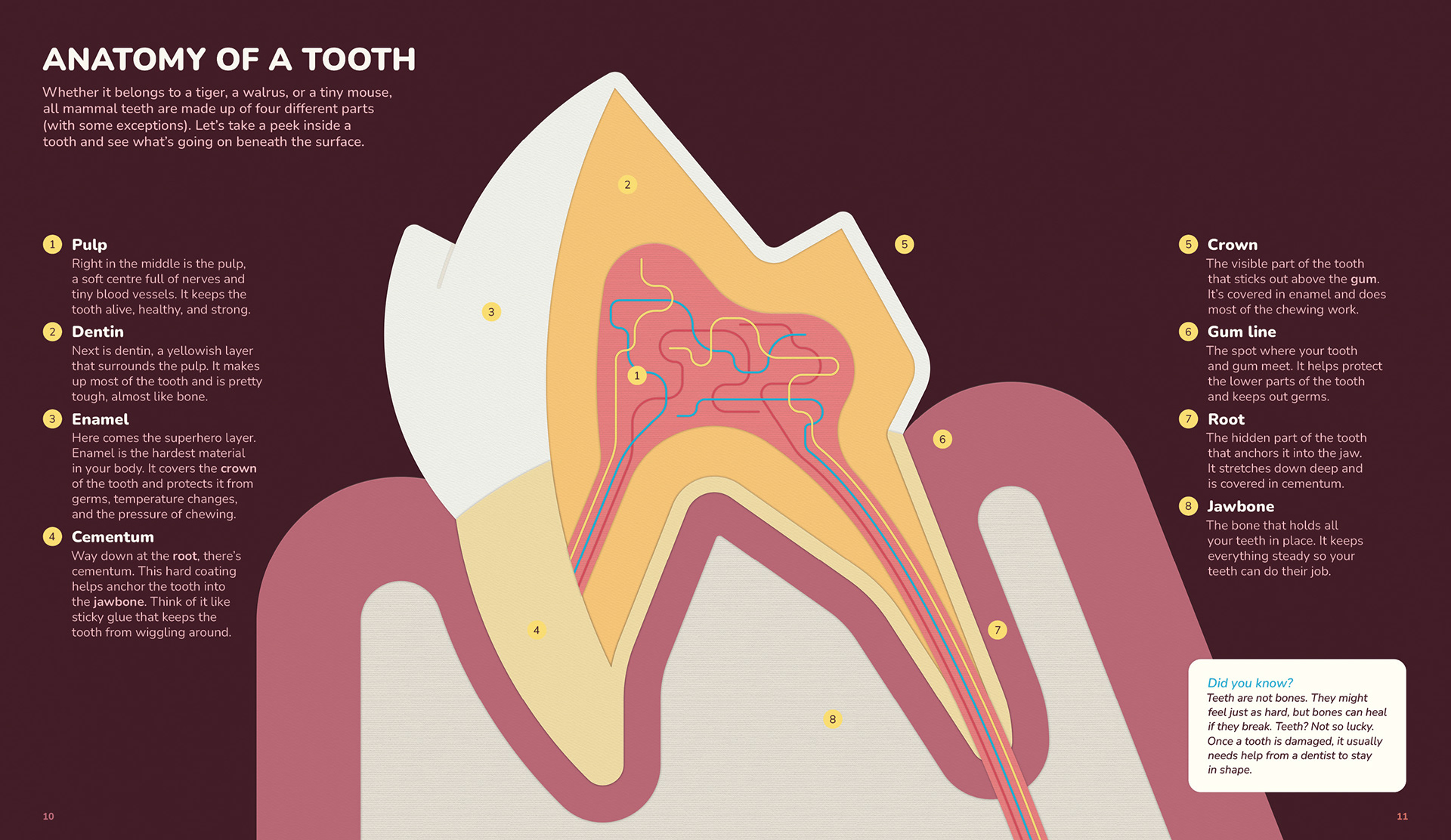
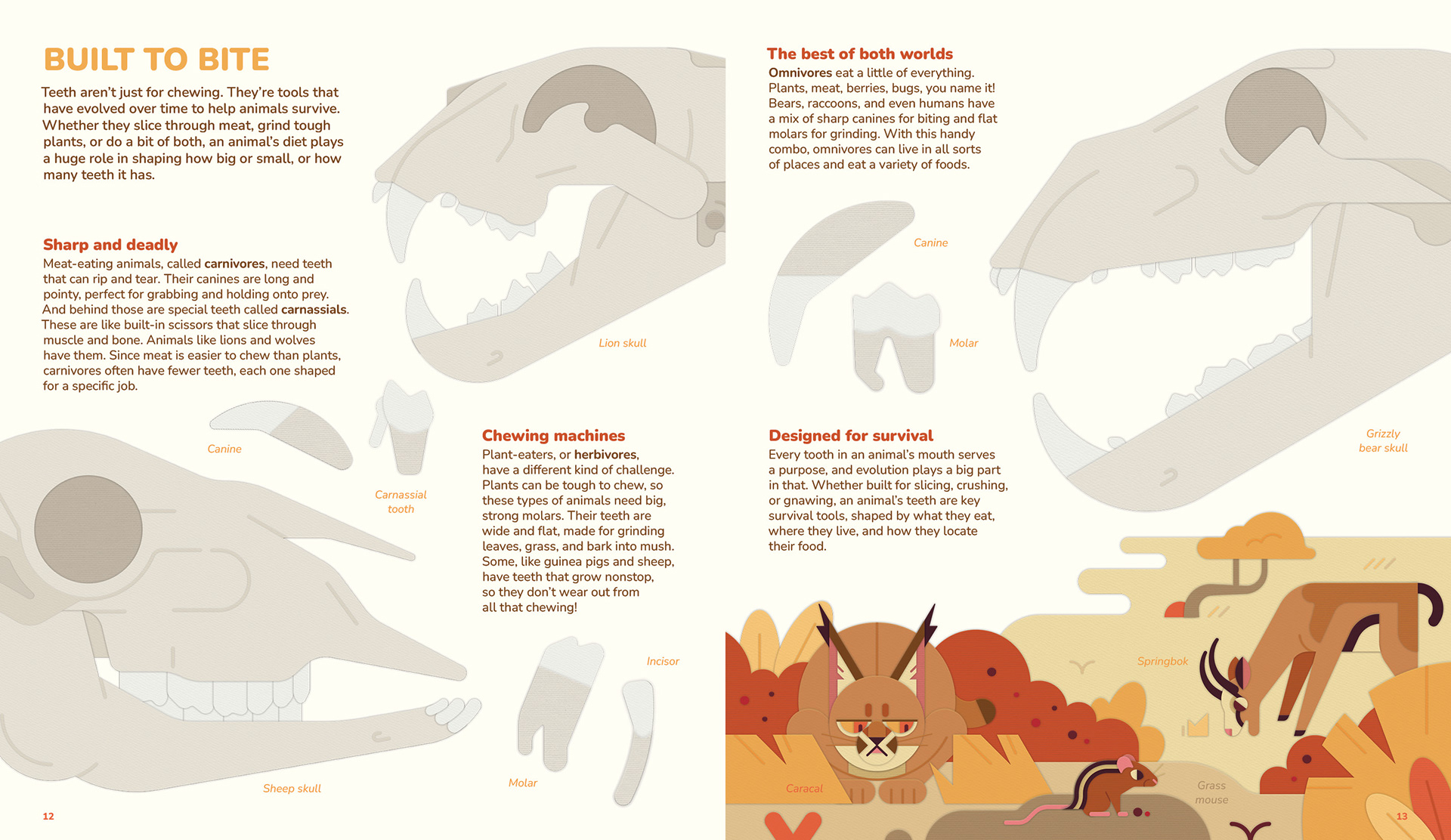
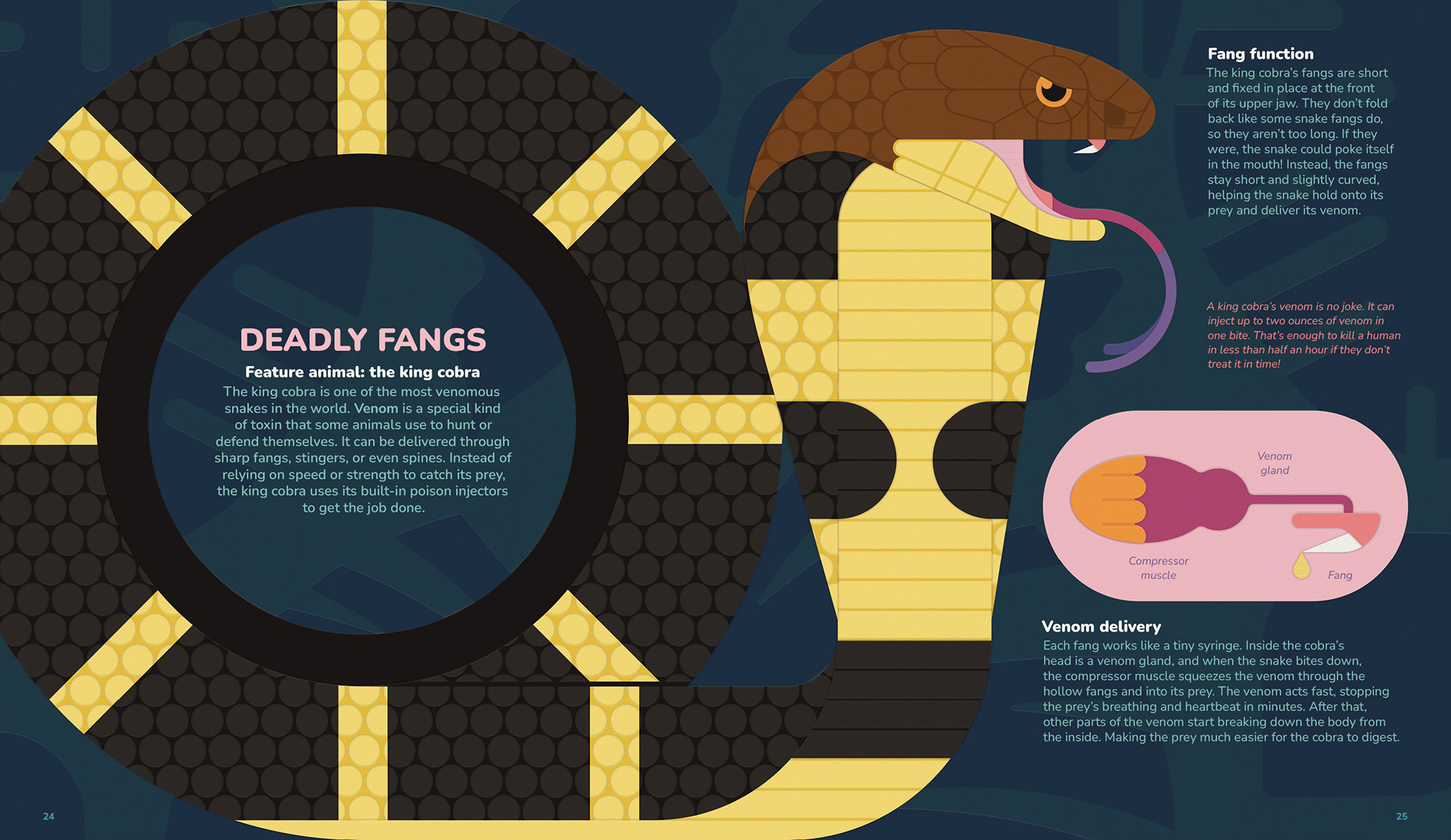
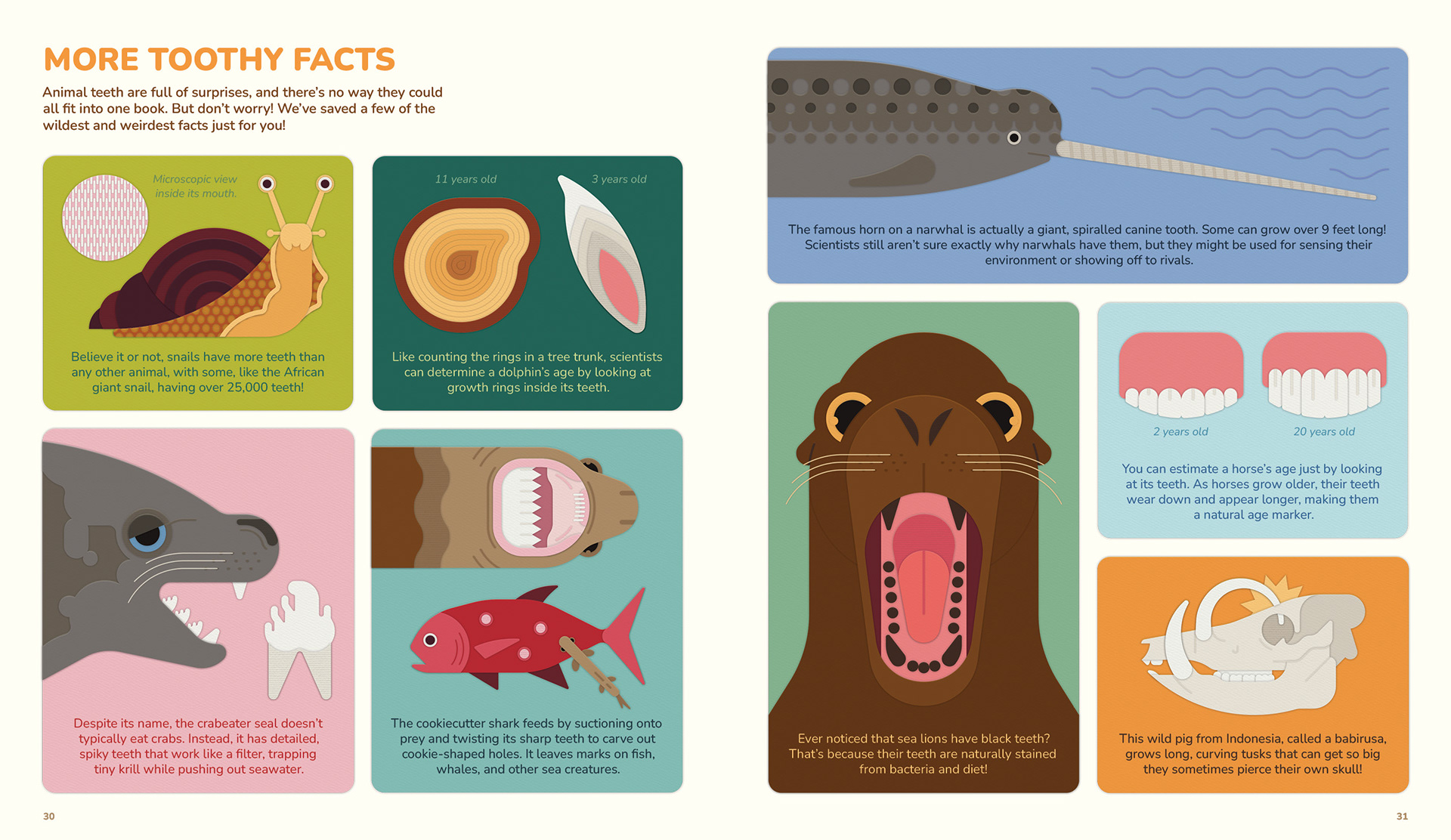
Several front cover concepts were explored before settling on the final direction. One of my favourite early ideas used negative space to form the title out of different animal teeth. While visually interesting, I ultimately chose a simpler cover with the teeth surrounding the title instead. This direction felt more cohesive with the rest of the book and better reflected the visual style.
Step 5 - The Results
Over a year of work and many refinements along the way, I completed my first children’s book! I printed a test copy at my workplace and later had a few copies professionally bound, which made the project feel real in a way I had not fully experienced before.
Over a year of work and many refinements along the way, I completed my first children’s book! I printed a test copy at my workplace and later had a few copies professionally bound, which made the project feel real in a way I had not fully experienced before.
This project was a major learning experience in writing, illustration, and book design, but also a personal milestone. It pushed me to follow through on an idea I had been thinking about for a long time, and to see it through from concept to finished book.
While publishing is something I would love to explore in the future, this project was a meaningful first step and showed me that creating children’s books is something I want to keep pursuing.
Before sending the files to a professional bookbinding company, I printed a test copy at my current workplace to make sure the spreads looked polished and translated well into print.